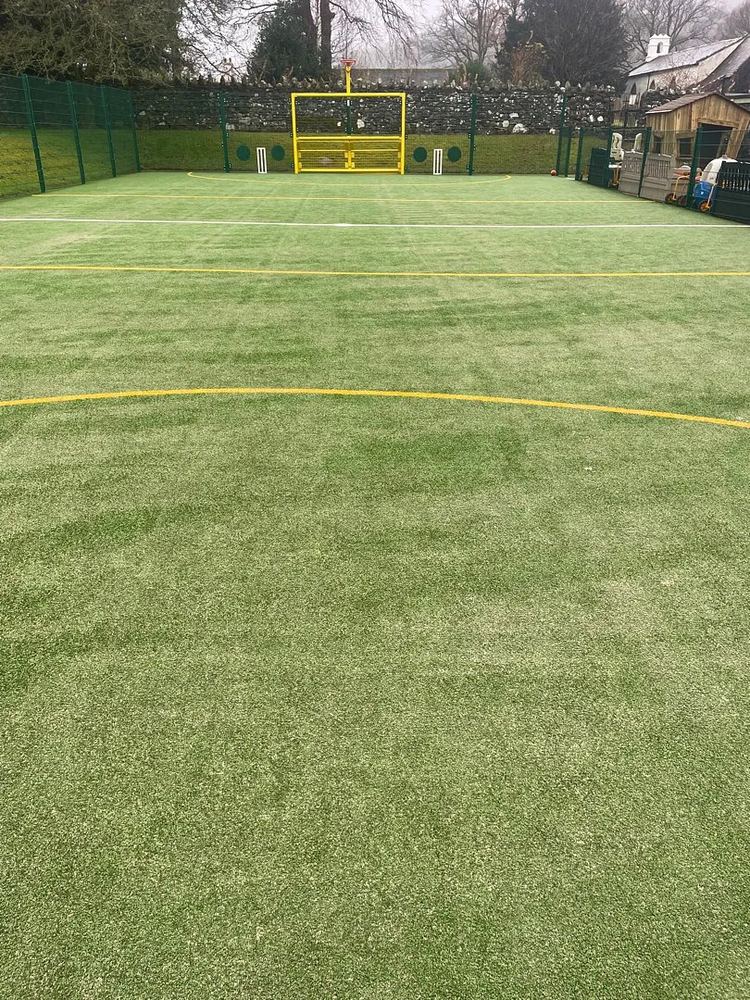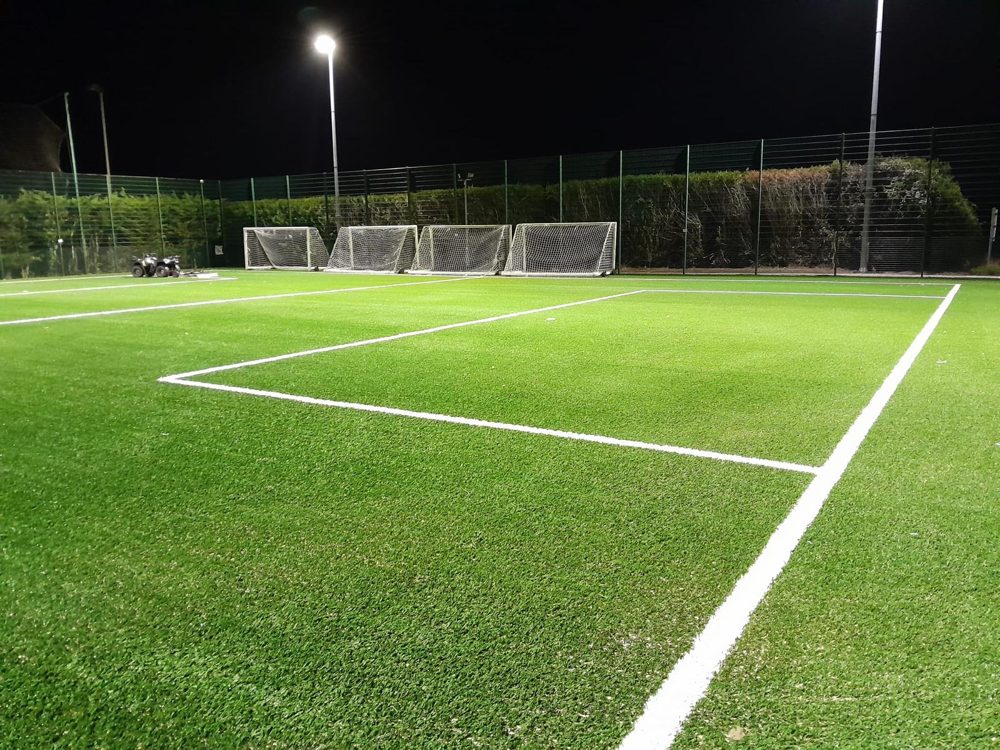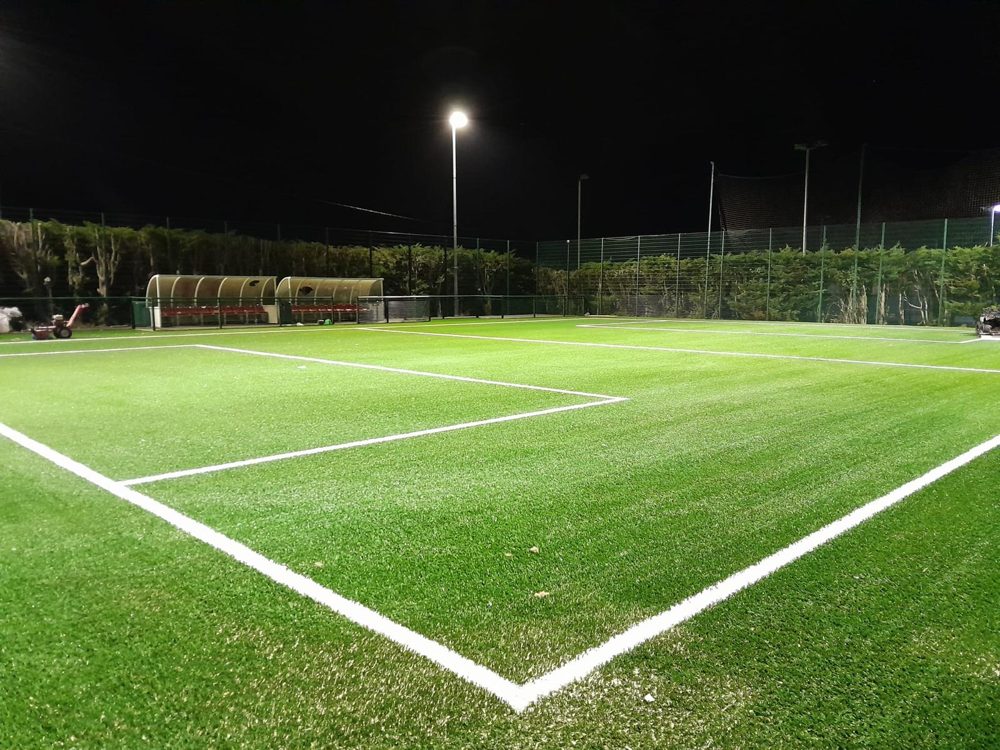
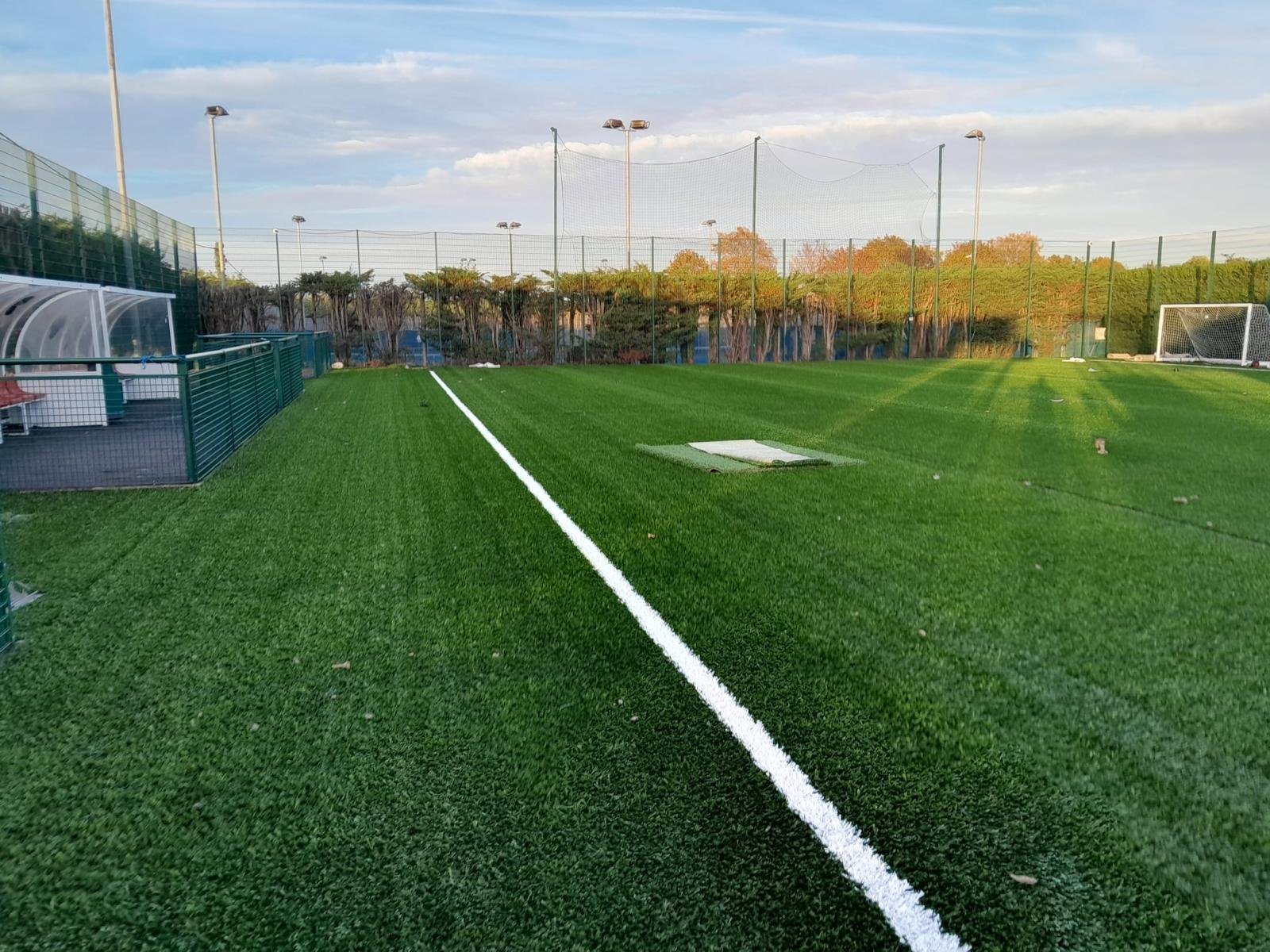
Natural grass looks wonderful in June. By November, many school and club pitches are closed, waterlogged or worn down to mud in the goalmouths. If you are weighing up a new or resurfaced pitch, here is how the two options compare in practice.
Playable hours
This is where artificial grass makes the biggest difference. A natural pitch needs rest to recover, and heavy rain can take it out of use for days. An artificial pitch can be used all year round, in most weather, with no recovery time between sessions.
Upkeep
Natural grass needs regular mowing, watering, feeding, re-seeding and line painting. An artificial pitch still needs looking after, but the routine is simpler: regular brushing, clearing debris and periodic professional maintenance. There is no line painting and no re-seeding.
Consistency
An artificial surface plays the same way in March as it does in September. The ball runs true, the lines stay put and players are not dealing with bare patches or ruts.
Long-term value
The upfront cost of an artificial pitch is higher, but the comparison changes once you add up the hours of use you gain and the ongoing cost of maintaining natural turf. Many sites also let their pitch out to local clubs in the evenings and at weekends, which helps it pay its way.
The bottom line
If your pitch only needs to work for a few months a year, natural grass may be enough. If you need a surface that is reliable every week of the year, artificial grass is usually the better long-term choice.