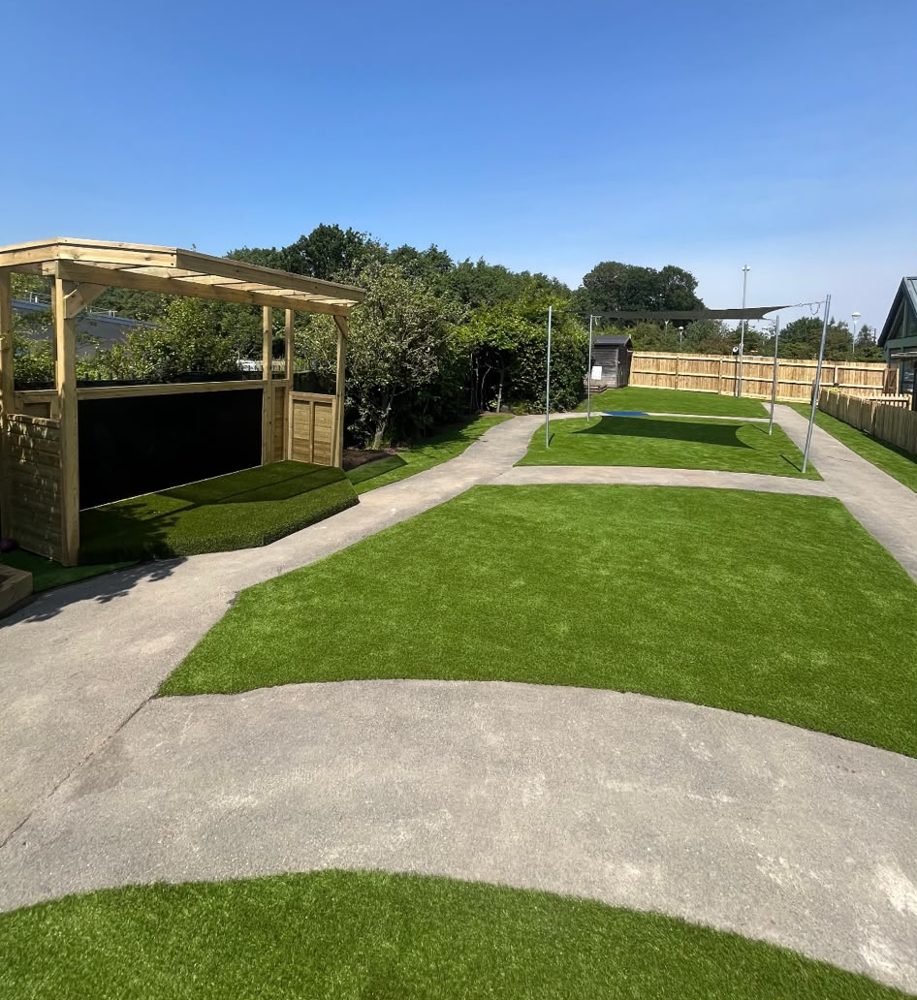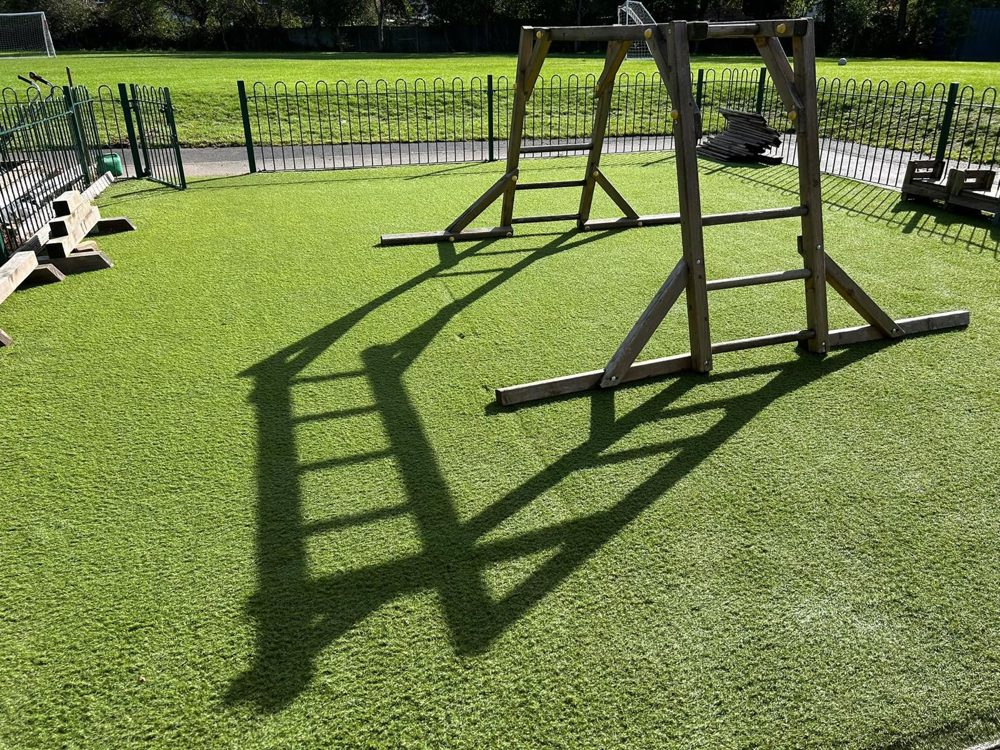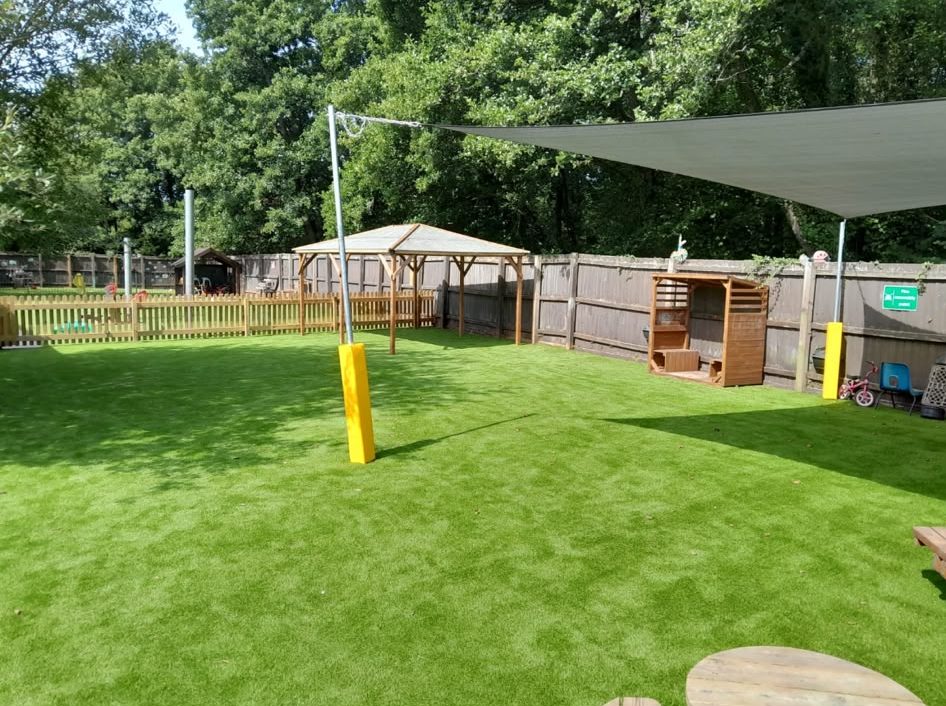
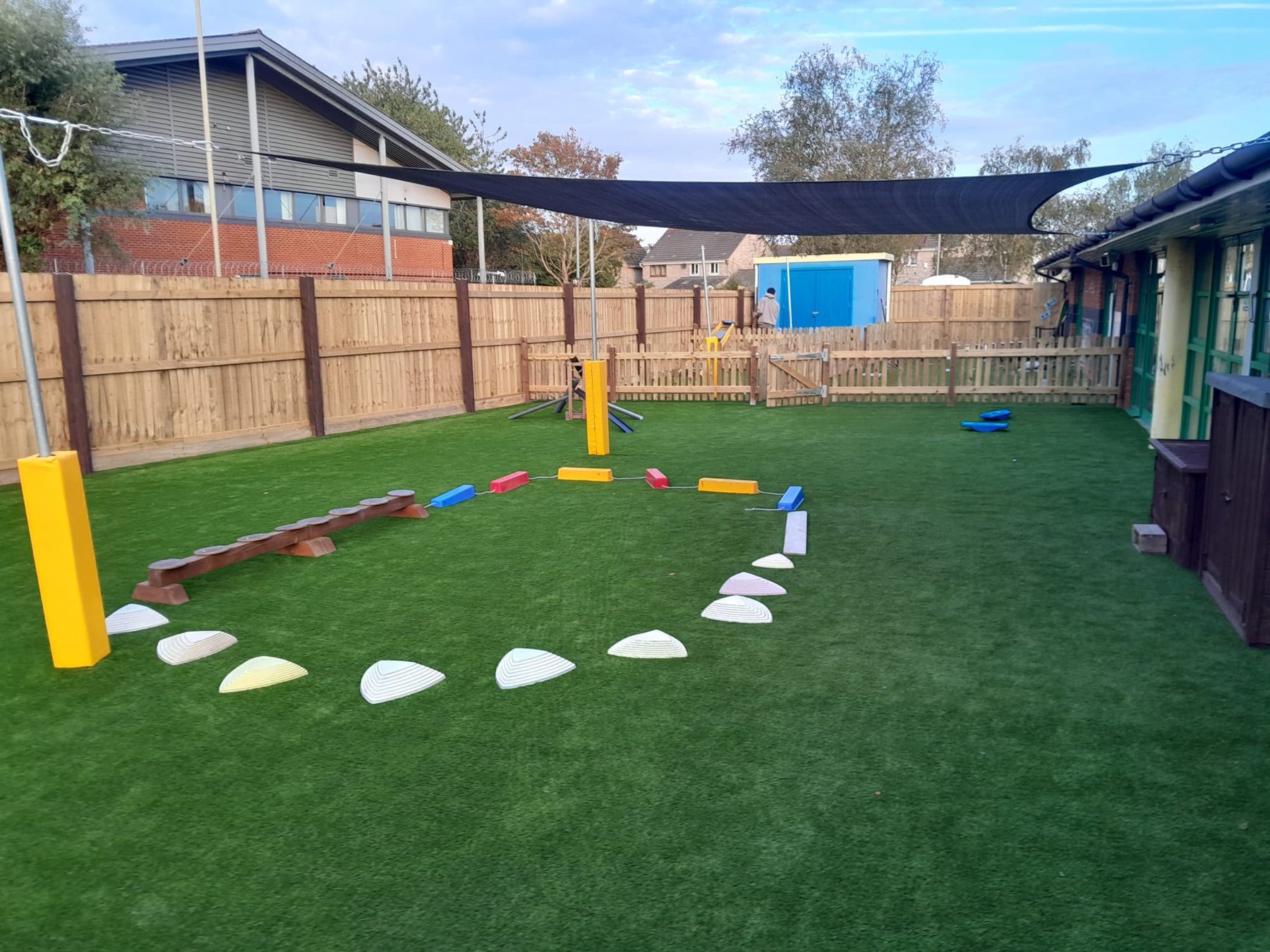
Trips and falls are a normal part of play. On tarmac or concrete, they often mean grazed knees, cut hands and a steady queue at the first aid station. Replacing hard ground with artificial grass safety surfacing is one of the most effective changes a school or nursery can make.
A softer landing
Artificial grass is far kinder underfoot than tarmac. Where extra protection is needed, it can be laid over shock-absorbing underlays and pads that cushion falls, matched to the critical fall height of your play equipment.
Usable all year round
Natural grass areas often close in winter because they turn to mud. A well-installed artificial surface drains and stays usable through the seasons, so children are not confined to the hard playground for half the year.
More inclusive play
A smooth, level, soft surface makes the whole play area more inclusive, so children of every age and ability can join in.
Cleaner classrooms
No mud means no muddy footprints, no wet clothes and less time spent changing children after outdoor play.
Paperwork you can rely on
Safety surfacing should come with the full technical specification, so you have the information you need for inspections and compliance.
If your playground is mostly tarmac or concrete, a free site survey will show you what a safer, softer space could look like.